Italian Colibri poppies — also called “Hummingbird Poppies” — are a specialized Italian-bred tetraploid variety created for the high-end cut flower trade. Unlike standard poppies, they feature significantly larger blooms, thicker longer stems and premium pastel colors.
Because seed is primarily sold-out to large-scale cut flower facilities, plants are virtually impossible for home gardeners to have access to — which is exactly why I wanted to have plants for you! Colors are a range of luscious pastel apricot and coral shades.
TO GROW — Full sun, completely bury the pot, space 12” apart
At the beginning of January we potted up 3 tiny poppy seedlings into 7” biodegradable pulp pots to grow them in our greenhouse under the cool winter conditions they love. Those seedlings are now big budded-up plants, ready to go straight into your landscape or large patio containers, where they’ll keep blooming until temperatures get hot.
BE SURE to bury the entire biodegradable pot so that NO edges stick up above the soil (or they’ll wick water away from the plant’s roots). Water well to settle everything in.
They’re “cut and come again” plants, meaning they’ll continue to send up more blooms if you keep them harvested or deadhead spent flowers.
IMPORTANT: Once we have hot day and night temps, the plants will stop producing. They’ll typically reseed in your flower beds to bloom again next year (and perhaps even in the fall) if you let some of the flowers turn into seed pods. Once the pods are brown and dry, they automatically disperse their seeds … meaning your poppies will return from their own dropped seeds. (Don’t use PREEN in those garden beds or the seeds won’t germinate.)
Sold with 3 budded up plants in a 7” biodegradable pot
FOR OTHER-WORLDLY CUT FLOWERS
Harvesting — Choose stems where the bud is just starting to crack open and show color. Cut the stem to the length you’d like to use in your arrangement. If the outer green casing on the bud is stuck, gently peal it back to help the flower open.
Sear the stems — To prevent poppy’s milky sap from clogging the stem, immediately after cutting, sear the bottom 1-2” in boiling water for 7-10 seconds OR (what I like to do) use a lighter or candle to burn the bottom of the stem.
Move them to cool water — Immediately place the stems into a few inches of cool, clean water — ideally with flower food added — and let them rest in a cool, dark place for several hours to fully hydrate before arranging.
As a focal flower — Due to their large size and dramatic, papery texture, they’re gorgeous as the centerpiece of a spring bouquet.
For a whimsical/airy feel — Place them at the outer edges of bouquets, allowing their naturally curved, long stems to move and “flutter.”
FULFILLMENT OPTIONS
Delivery — April 23 to Lexington and nearby communities
Pickup — Saturday, April 25, noon - 2 p.m. at Boggs Cottage, 3808 Combs Ferry Road
Italian Colibri poppies — also called “Hummingbird Poppies” — are a specialized Italian-bred tetraploid variety created for the high-end cut flower trade. Unlike standard poppies, they feature significantly larger blooms, thicker longer stems and premium pastel colors.
Because seed is primarily sold-out to large-scale cut flower facilities, plants are virtually impossible for home gardeners to have access to — which is exactly why I wanted to have plants for you! Colors are a range of luscious pastel apricot and coral shades.
TO GROW — Full sun, completely bury the pot, space 12” apart
At the beginning of January we potted up 3 tiny poppy seedlings into 7” biodegradable pulp pots to grow them in our greenhouse under the cool winter conditions they love. Those seedlings are now big budded-up plants, ready to go straight into your landscape or large patio containers, where they’ll keep blooming until temperatures get hot.
BE SURE to bury the entire biodegradable pot so that NO edges stick up above the soil (or they’ll wick water away from the plant’s roots). Water well to settle everything in.
They’re “cut and come again” plants, meaning they’ll continue to send up more blooms if you keep them harvested or deadhead spent flowers.
IMPORTANT: Once we have hot day and night temps, the plants will stop producing. They’ll typically reseed in your flower beds to bloom again next year (and perhaps even in the fall) if you let some of the flowers turn into seed pods. Once the pods are brown and dry, they automatically disperse their seeds … meaning your poppies will return from their own dropped seeds. (Don’t use PREEN in those garden beds or the seeds won’t germinate.)
Sold with 3 budded up plants in a 7” biodegradable pot
FOR OTHER-WORLDLY CUT FLOWERS
Harvesting — Choose stems where the bud is just starting to crack open and show color. Cut the stem to the length you’d like to use in your arrangement. If the outer green casing on the bud is stuck, gently peal it back to help the flower open.
Sear the stems — To prevent poppy’s milky sap from clogging the stem, immediately after cutting, sear the bottom 1-2” in boiling water for 7-10 seconds OR (what I like to do) use a lighter or candle to burn the bottom of the stem.
Move them to cool water — Immediately place the stems into a few inches of cool, clean water — ideally with flower food added — and let them rest in a cool, dark place for several hours to fully hydrate before arranging.
As a focal flower — Due to their large size and dramatic, papery texture, they’re gorgeous as the centerpiece of a spring bouquet.
For a whimsical/airy feel — Place them at the outer edges of bouquets, allowing their naturally curved, long stems to move and “flutter.”
FULFILLMENT OPTIONS
Delivery — April 23 to Lexington and nearby communities
Pickup — Saturday, April 25, noon - 2 p.m. at Boggs Cottage, 3808 Combs Ferry Road

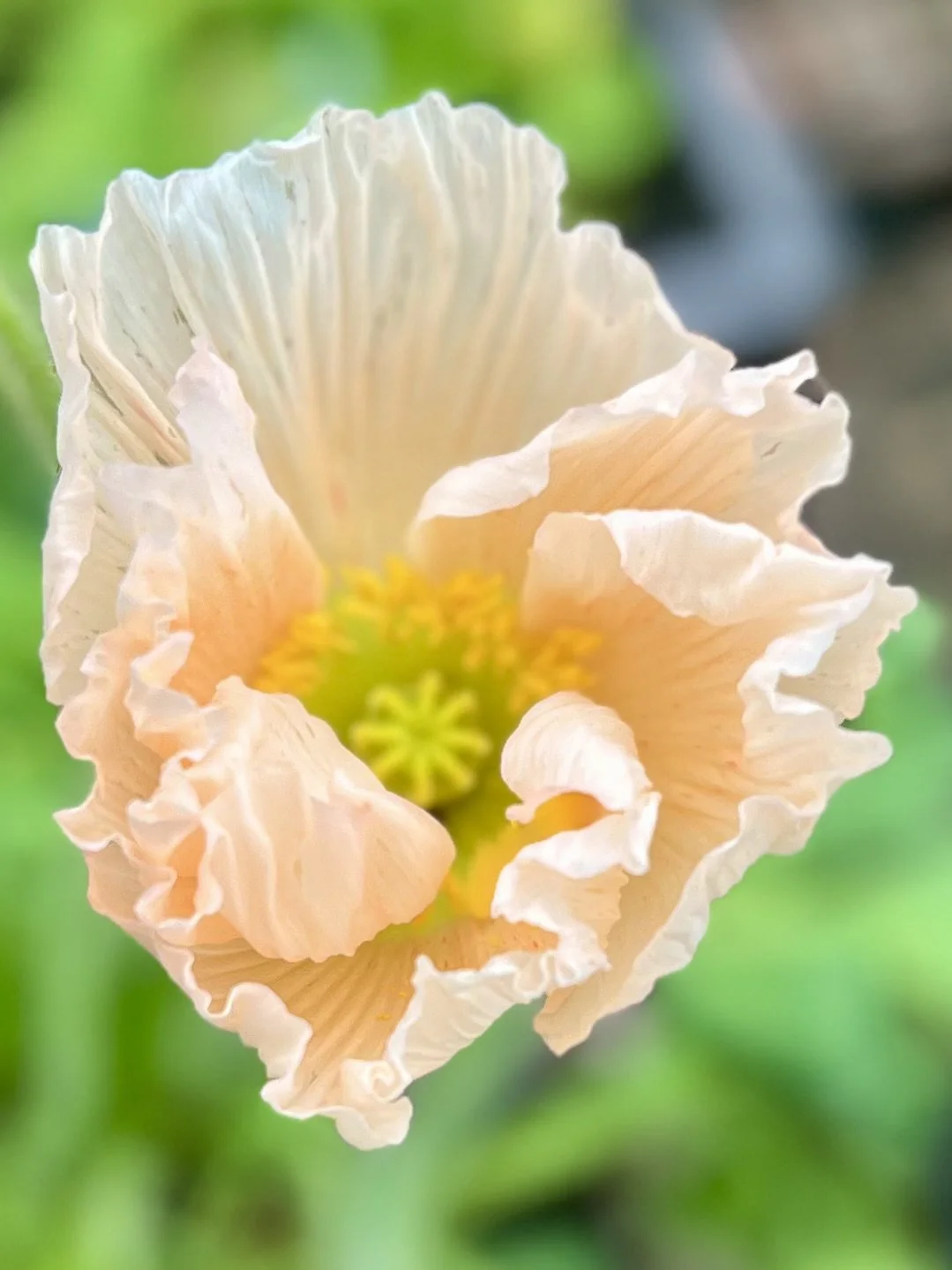 Image 1 of 7
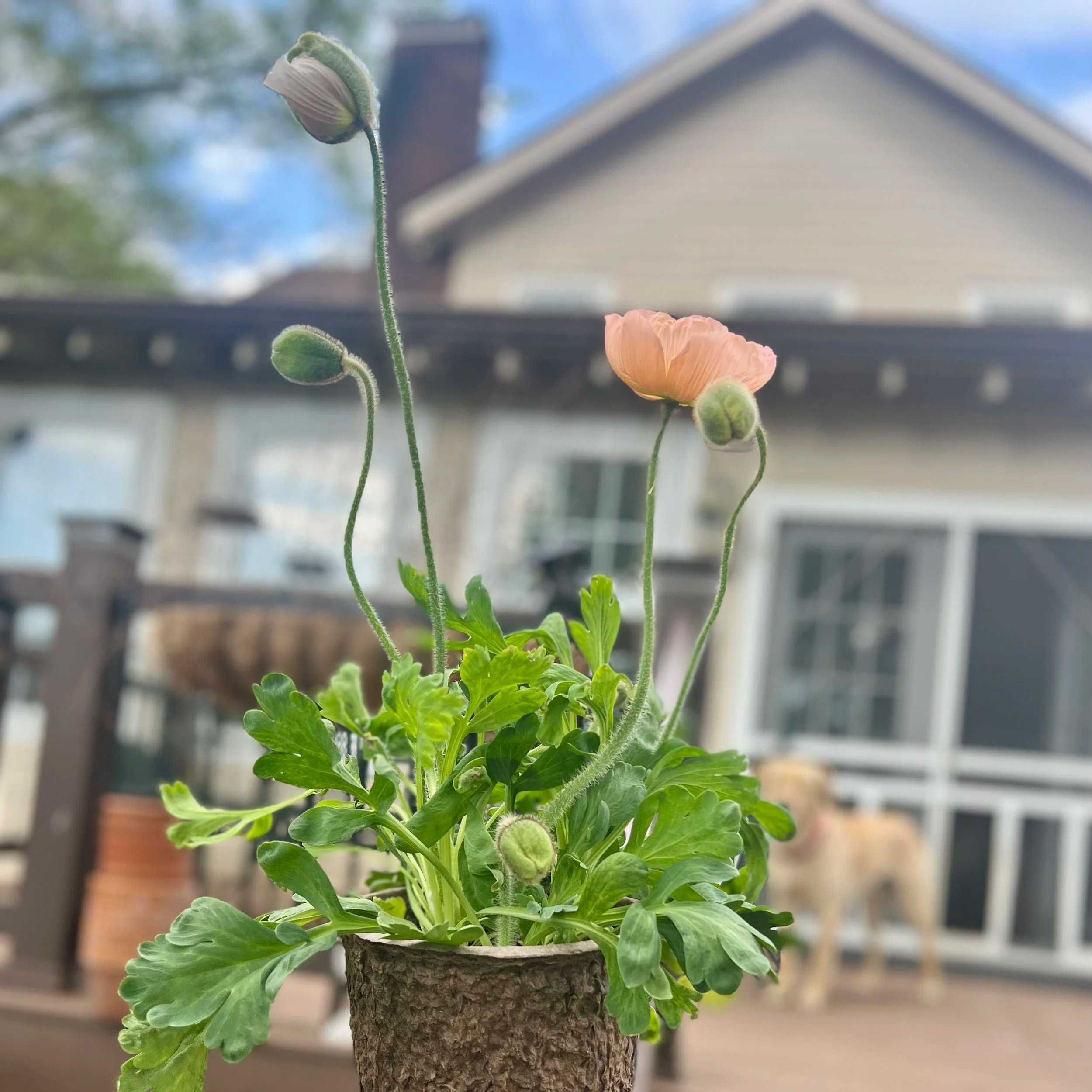 Image 2 of 7
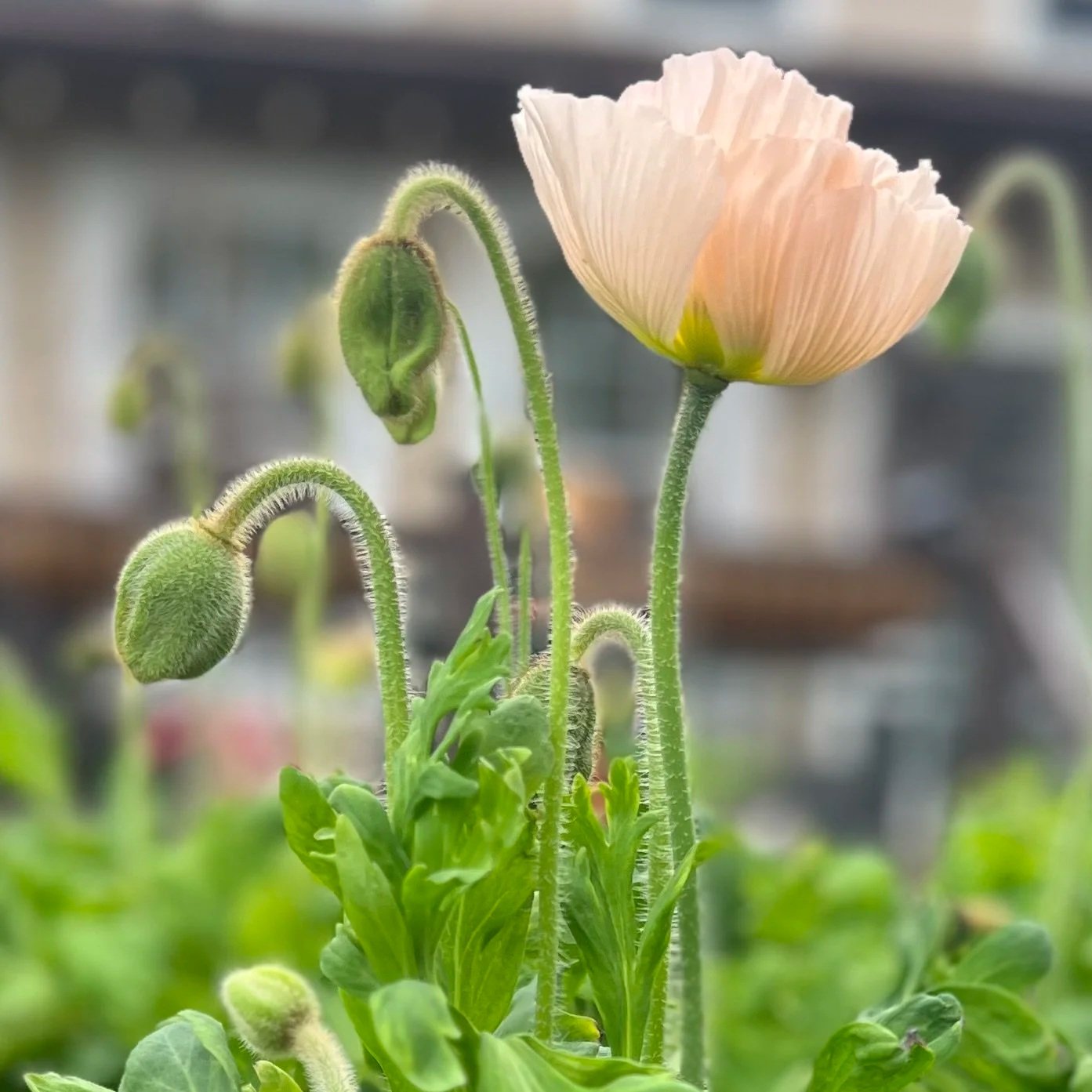 Image 3 of 7
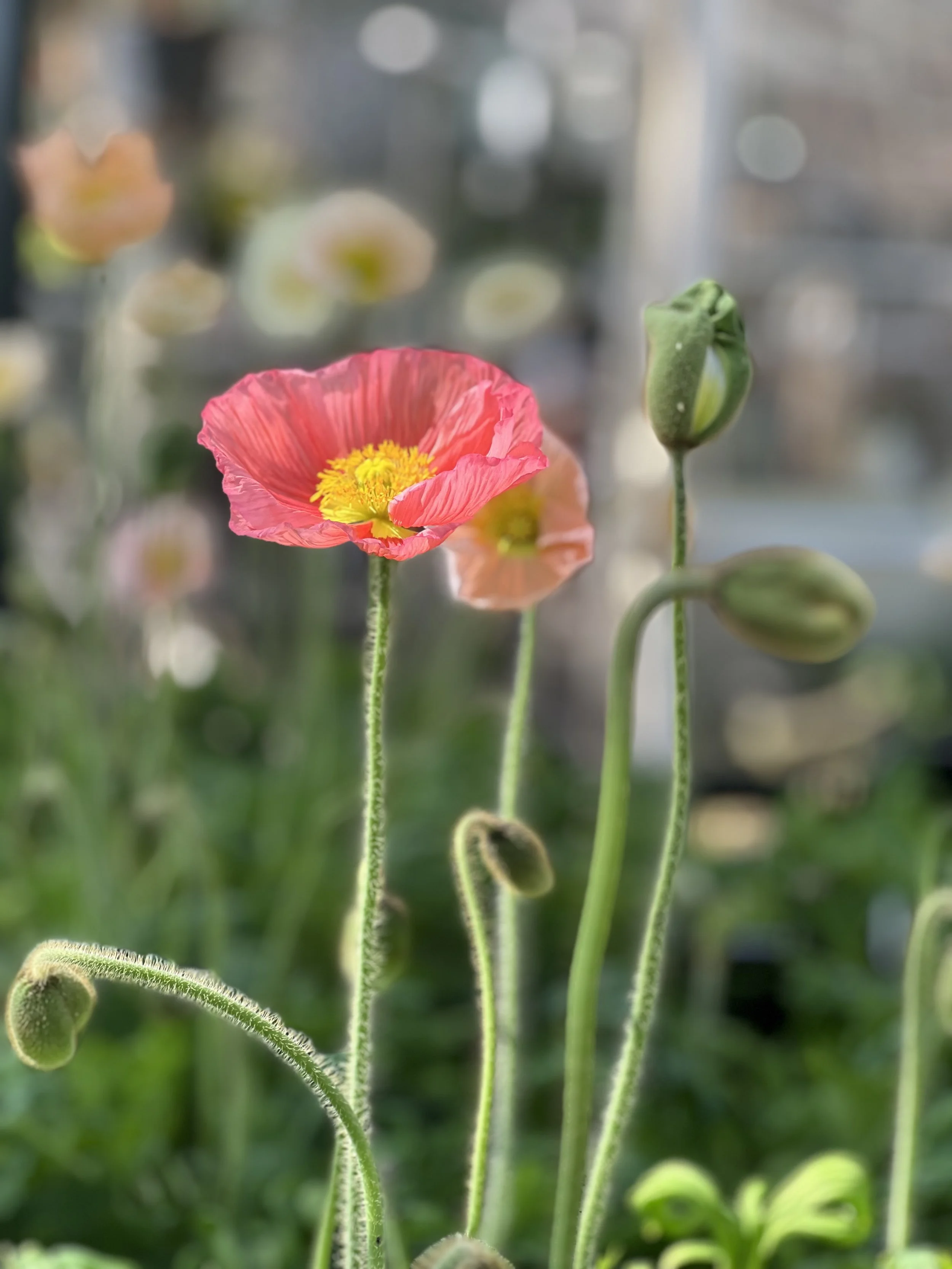 Image 4 of 7
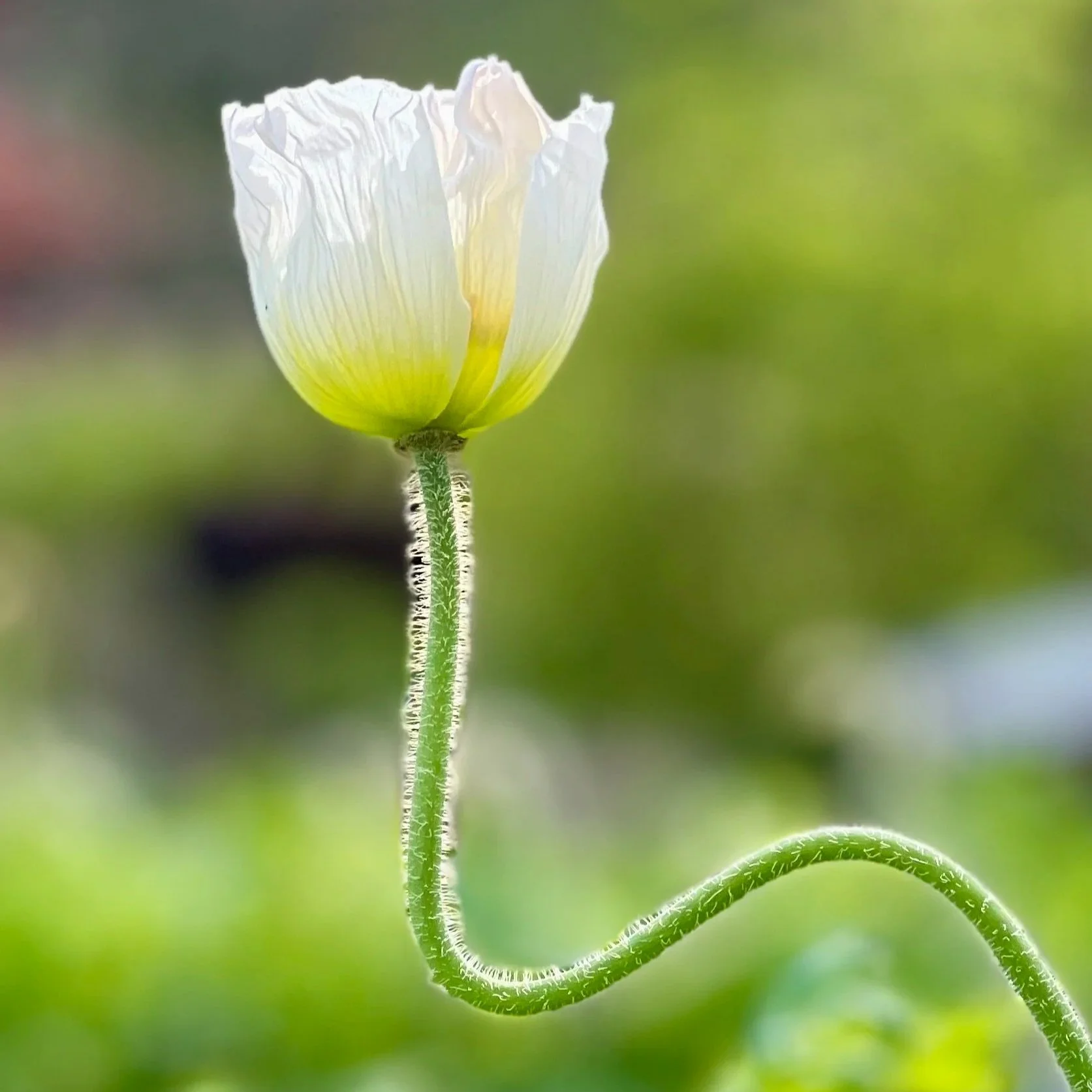 Image 5 of 7
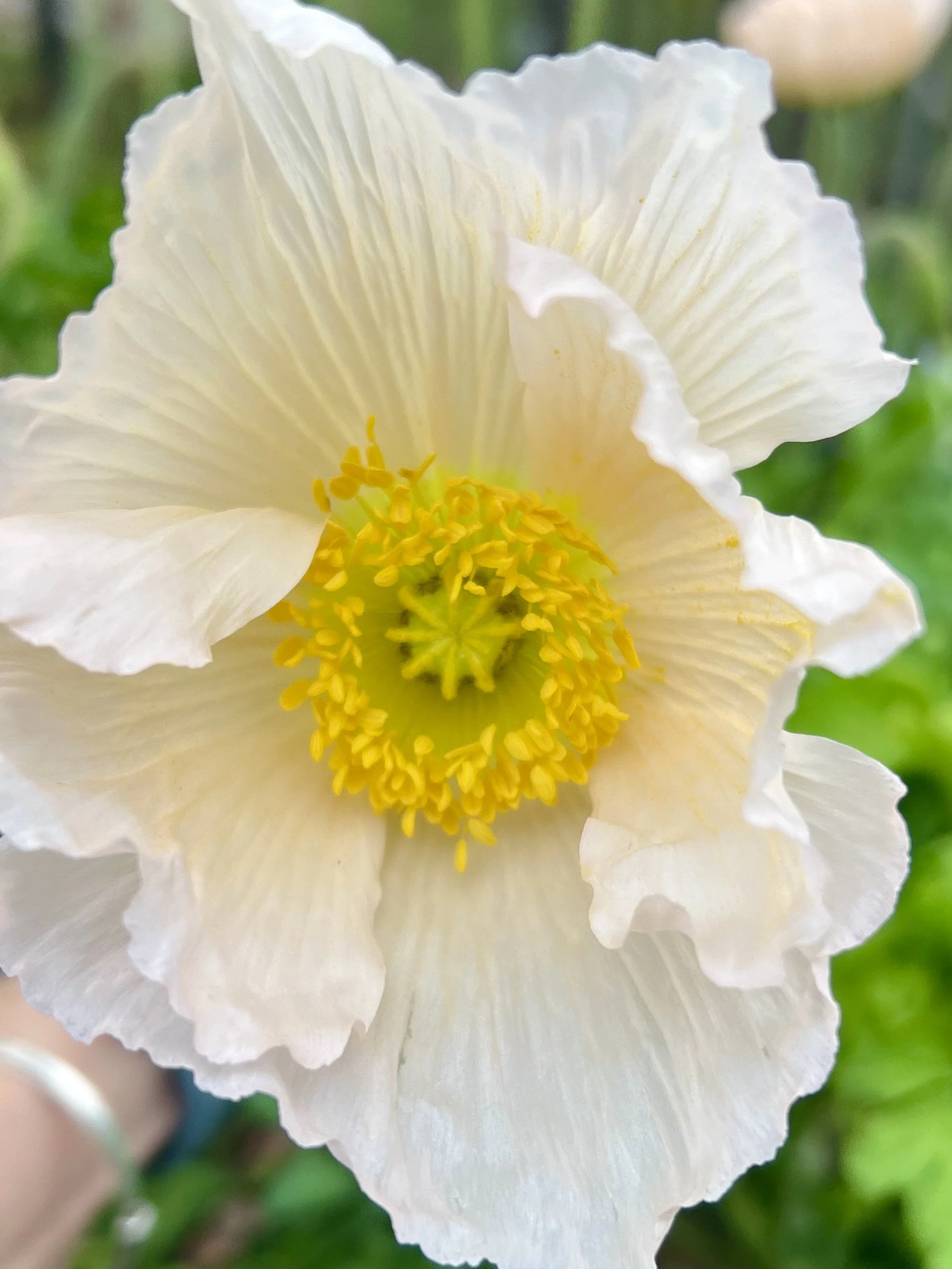 Image 6 of 7
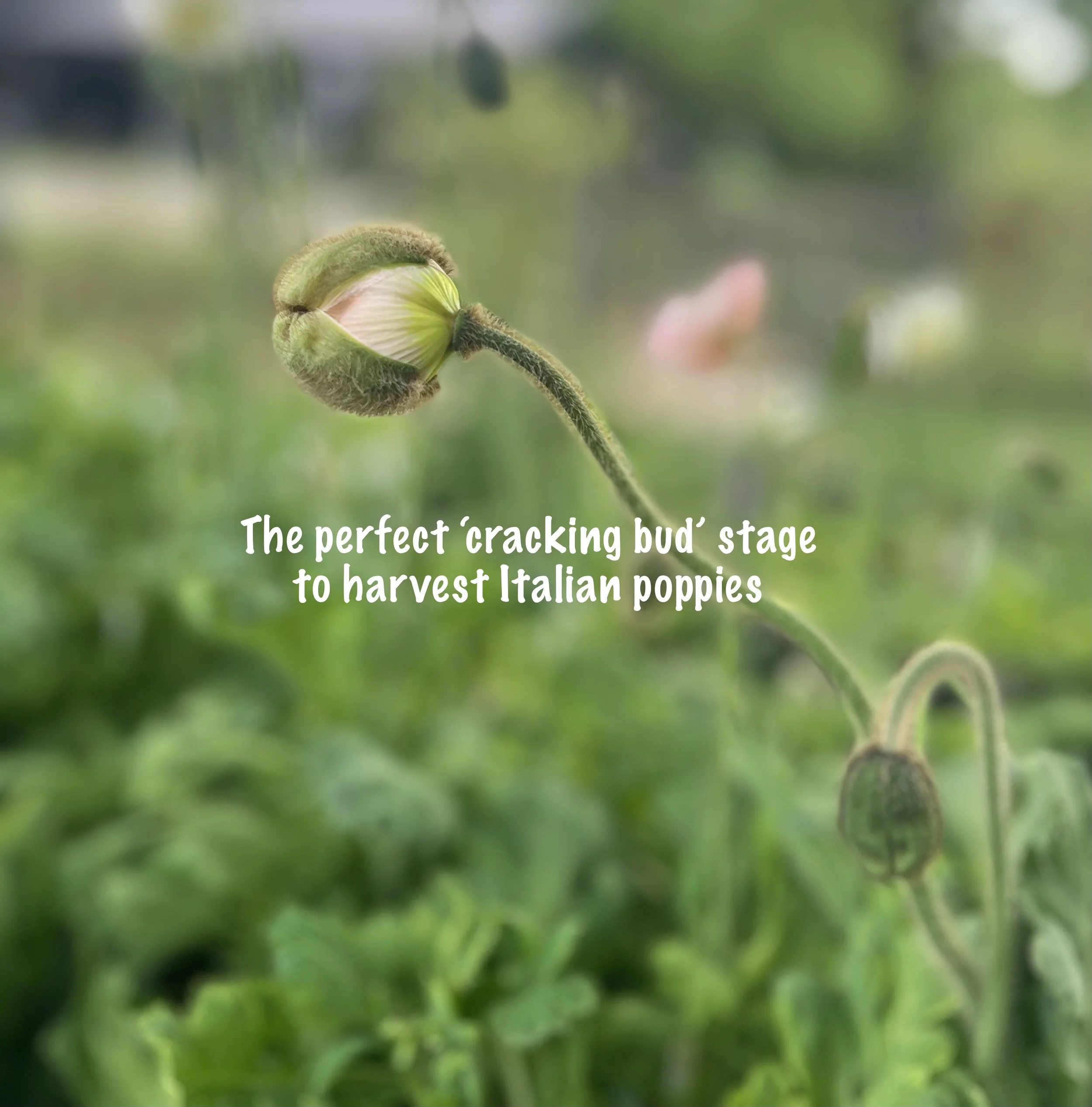 Image 7 of 7